
AAA Screening
Abdominal Aortic Aneurysm (AAA) Screening for People Aged 65+
The Ontario Abdominal Aortic Aneurysm Screening Program is the first of its kind in Canada. It is designed to save lives by promoting early detection and prevention of aortic ruptures.
As we age, certain health risks become more common, and one of the most serious yet often silent conditions is an abdominal aortic aneurysm (AAA).
The good news is that a quick and painless abdominal ultrasound can help detect it early, often before it becomes dangerous.
What Is an Abdominal Aortic Aneurysm (AAA)?
The aorta is the largest blood vessel in your body. It carries blood from your heart down through your chest and abdomen.
An abdominal aortic aneurysm happens when a section of this artery in your abdomen becomes weakened and bulges outward, like a balloon.
Many people do not even know they have one. That is why screening is so important.
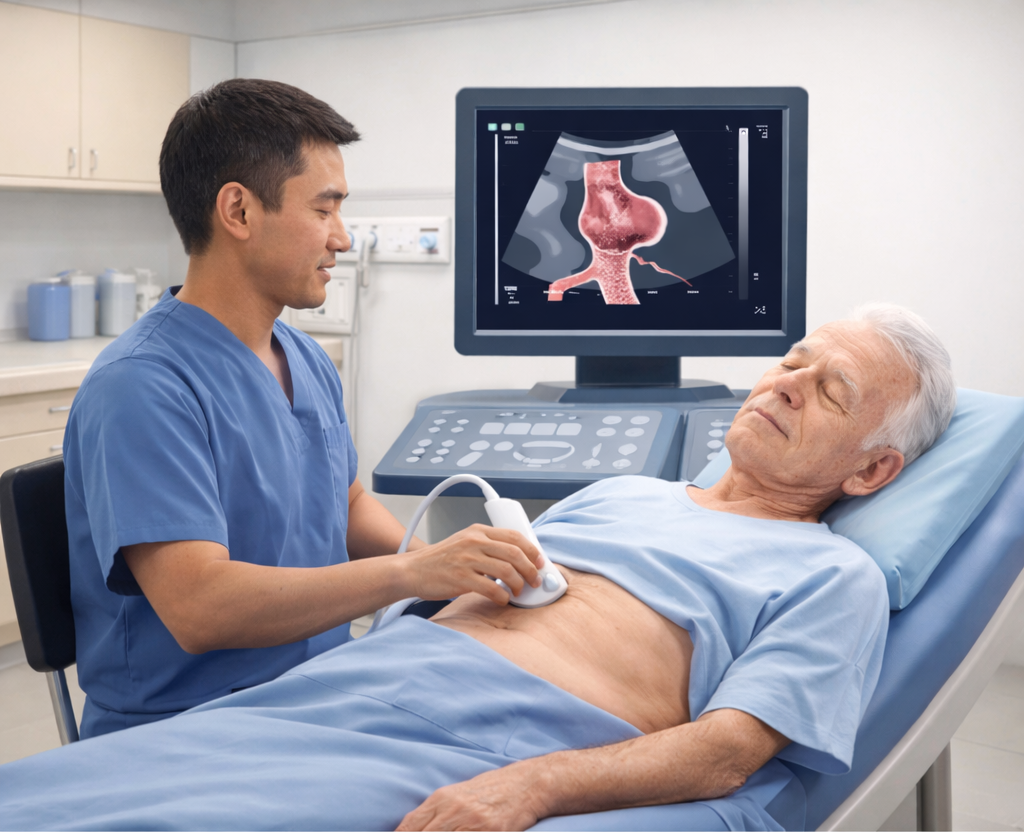
Why People Aged 65+ Should Pay Attention?
Abdominal Aortic Aneurysm (AAA) is much more common in older adults, especially:
Because symptoms often do not appear until it is serious, doctors recommend preventive screening for people at risk.
Call 905 897 6970 and book a screening appointment at with X-RAY 365 Protect your future. One small test can make a big difference.
Why Early Detection Matters?
Abdominal Aortic Aneurysm (AAA) can be a life-threatening condition if an aneurysm ruptures. Screening with an abdominal ultrasound can:
How an Abdominal Ultrasound Helps?
An abdominal ultrasound is the main test used to detect abdominal aortic aneurysm (AAA). It is:
It allows doctors to measure the size of the aorta and monitor any changes over time.
When Should You Get Screened?
You should talk to your doctor about abdominal aortic aneurysm (AAA) screening if you:
In many cases, a one-time ultrasound screening is enough to take control of the situation.
How to Prepare?
Before the abdominal ultrasound, you may be asked to:
Always follow the instructions provided by your clinic.
What Happens During the Screening?
The process is simple:
You can go home immediately afterward and continue your usual daily activity.
What Do the Results Mean?
Your doctor will explain your results, but generally:
Early detection gives you more options and a better outcome.